Wednesday, August 10, 2016

UAF Graduate Student Participates in Korea Arctic Academy


By Liz Bowman


Participants of the July 2016 Korea Arctic Academy, a study program that brought together students from Korean universities and from UArctic member institutions. (photo courtesy Liz Bowman)


My name is Liz Bowman, and I am a graduate student in the Arctic and Northern Studies program. I am working on my Masters and focus on Arctic policy. Within policy, I am interested in discovering the motivations of non-Arctic states to participate in Arctic affairs. This summer, I had the opportunity to participate in the 2nd Korea Arctic Academy (KAA) hosted by the Korean Ministry of Oceans and Fisheries, and organized by UArctic and Korea Maritime Institute. This academy brought together 29 students (19 from Arctic states, 10 from Korea) to discuss the Arctic from our perspectives, as well as learn about what Korea is doing in the Arctic context. It is hard to do this experience justice with a blog post, but I will do my best to convey how rewarding my time in Korea was, and what impacts it will have on my future studies.

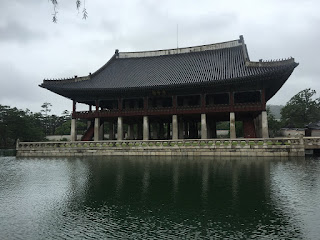
Building within the Gyeongbokgung Palace in Seoul.
(photo courtesy Liz Bowman)
Korea cares deeply about the Arctic and the implications that a changing Arctic climate has on others. It is because of this, and other reasons, that students from the North were invited to participate in the program. Beyond learning about Korea’s positions on a variety of Arctic issues, I was able to experience the hospitality, kindness, and unique culture of the Korean people. Perhaps the most significant thing about the KAA program was that it truly was an opportunity to create friendships, partnerships, and foster mutual understanding between those from the Arctic region and Korea.

In my conversations with Korean students, I learned that many are curious about maritime issues, warming Arctic temperatures, and what everyday life is like for many of the Arctic students. I found it equally as valuable to connect with others from the Arctic, many coming from indigenous communities, that were willing to share their traditional knowledge with us so we had a better understanding of our own region.

Liz Bowman (second archer from the right) learns traditional Korean archery while wearing  a traditional outfit during the 2nd Korea Arctic Academy. (photo courtesy Liz Bowman)
Please don’t think that the KAA was only hard work. In addition to lectures about policy, science, and the future of the Arctic, we also learned about Korean culture. I was able to participate in traditional Korean archery, sing K-Pop karaoke, and eat more kimchi in a few days then I had ever eaten in my lifetime.

Although the program was short, only 10 days, I have so many valuable experiences to draw upon as I move forward with my degree program at UAF. I now have valuable connections with Korean students and faculty who are interested in sharing their thoughts about a global Arctic, one that includes all those who are interested in the future of the North, not just those who are geographically located there. I can use my experience in Korea to support my ideas about non-Arctic states in the Arctic context and how the Arctic can continue to be a place of cooperation. It is hard to express my gratitude for the Korean Maritime Institute and UArctic for hosting such a rewarding academy. It is my hope that other UAF students will want to participate in this program in future years and learn about what the rest of the world thinks of our backyard.

Thursday, June 2, 2016

Feature of the Month - May

Ritika Saxena grew up in Lucknow, Northern India. People around the world and different cultures intrigue her. She says, "After high school, I moved to Australia on a scholarship to study Bachelor of Biological Science." As a part of her degree, she decided to go on exchange at UAF over Spring 2016.


What motivated you to study abroad and choose UAF?


She believes that you learn a lot by living in a different country and a different culture. So, after choosing to study in Australia ‘The Land Down Under’, she says "I decided to go as far up as I could and that's how I decided to move to the other end of the world to UAF!"
After spending over 4 months in the US, she says she still couldn't wrap her head around gallons and pounds!
She had never seen snow before she arrived in Alaska and the mere thought of it excited her. "I had only seen in movies how people thrived in such harsh climatic conditions. I looked forward for a frigid cold experience for myself!"


How was your experience traveling in Alaska and the lower 48?


"I went to North Pole which was an interesting town with candy canes for light poles!"
She visited Chena Hot Springs, saw the amazing sculptures at the Ice Park and went to the Yukon Quest Sled Dog Race start.
She had planned a trip to New York and Los Angeles at the end of the semester.

Ritika (L) in North Pole, Alaska


(L to R) Ritika at the Ice Park, Yukon Quest Race Start in Fairbanks and at the Statue of Liberty in New York

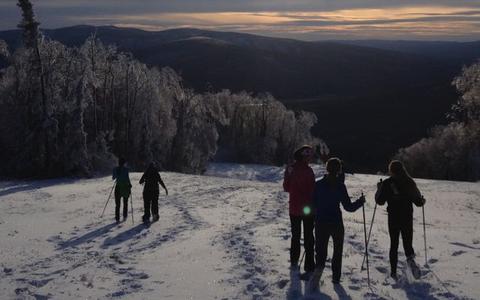
 "I went to bonfires at the Smith lake on campus in pitch black darkness and went snowshoeing up Pedro Dome!"

 How was your Alaskan winter experience?


"I did not see fresh snow for the first six weeks and when I did see the snow fall, holy moly! it was beautiful and enchanting and all the good things you can think of!"
The cold was harsh but she says the campus has great facilities that keep businesses go on as usual. "Coming back from the lab at 9pm in pitch dark, the campus shuttle was an extremely useful resource".
She says “To cope up with the cold, I wore so many clothes during the winter that at any given point, I was wearing half my wardrobe! . But, I made it through the winter safe and sound! 

She loved capturing snowflakes and taking pictures in the snow

What do you miss about Alaska now that you are on your way back to your home university?

"I will miss a lot of things about Alaska. I made a lot of memories having conversations over dinner with friends over the past semester. I will miss looking out the window and seeing the world just covered in a blanket of white. I will miss going out in the middle of those winter nights  to gaze at the northern lights and take pictures . I will miss the excitement when Spring fest came around. I will miss seeing the huskies!"
(L) Ritika with the Northern Lights. The campus has some great spots to view the Northern Lights


Would you recommend students to study abroad?


Ritika believes that studying abroad gives you a chance to explore yourself. She says "Even simple things like your favorite cuisine changes once you live in a new place and experience new things. The best part about studying abroad is that you get to travel without taking a break from your studies! It shows your potential employers that you are easily adaptable and enjoy a diverse working atmosphere. More than anything, it helps you grow personally."


What are you plans for the future?


Ritika is trying to get a position in a placement program in China later this year. She says "After I (hopefully) graduate next year, I may work for a couple of years. I eventually hope to get a PhD in Genetics, Epigenetics and Stem Cells and teach at a university. One of my dreams is to study and live in Germany"

  Describe UAF in one word


Magical.


Ritika blogs about her experiences at https://riteekuh.wordpress.com


Tuesday, May 3, 2016

Feature of the Month- April


Born and brought up in Moscow, Russia, Matvey Debolskiy is working towards his PhD at the Geophysical Institute here at UAF since Spring 2014.
Excelling in the Physics and Math Olympiads, Mat graduated from a distinctive high school consisting of students having an aptitude towards the sciences. He says “Maths was a lot more fun for me than Physics because I didn’t have to keep in mind all the assumptions while I solved Maths!”

On his parents’ insistence, he went to the Moscow University to study Geography.
He says “I didn’t mind studying Geography and when the time came to choose the subject of my research focus and laboratory work, I flipped a coin. And that is how I got into glaciers and permafrost!” Meteorology would have been on the flip side, Mat pointed out.
During his research in Russia, Mat preferred using techniques that involve applied Math or Physics as opposed to the Landschaft (Landscape) Paradigm method popular in Russia which involved data collection exercises that he says were a little primitive. That being said, he enjoyed the numerous field visit opportunities that were part of his research and he spent most of his summers in the Caucasus range between The Caspian and Black seas, mapping and studying glaciers.He was a part time employee at the Melnikov Permafrost Institute for the last three years of his undergraduate degree.
Mat (L) with his brother in Moscow


What are you doing now?

"Trying to get my PhD!"
Mat is working on modeling of watersheds with permafrost and glaciers. He is currently post- processing Ground Penetrating Radar data for his PhD thesis and thinks he’ll get his doctorate in about two more years.


He chose UAF to do research and get a PhD because of UAF's renowned Geophysical Institute. He says that the team of professors and associates here is very talented and accomplished that creates a great environment for prospective researchers.


Matvey at work in his office


How were your first Summer and Winter experiences?

Mat spent two winters in Igarka, Siberia before he arrived in Alaska so he had no issues getting acclimatized to the unusual darkness and cold. He spent his summers around the Alaska Range making hydrological and meteorological  observations, driving two times a week around Delta junction at times.


Mat during field visits around Alaska


What do you miss about home?

“My cat, Kotjik.

The small coffee shops in Moscow, Doner and the “big city” life" 

Doner is a popular street food in Moscow
Source: yenisafak.com


What are your future plans?

Mat would like to continue working in academia, possibly work as a post doctorate fellow. He says, "I would love to work in Europe so I would be close to Moscow and my family".
The recently married Mat has his research prioritized but says it sometimes gets difficult to stay away from family.

Describe UAF in one word

Geophysics.


Saturday, March 19, 2016

Feature of the Month- March

"It is Challenging, but extremely rewarding!"


Megan Rourke, a Sociology major from the University of Stirling spent two semesters at UAF as an exchange student. The Scot, who grew up in a small village outside Edinburgh, lived and went to school there for most of her life. After high school when she turned 18, she went travelling around Tanzania, Australia and South East Asia for a year and half before coming home and starting school at the University of Stirling. She says "I had definitely caught the travel bug and spent time in different cities across Europe throughout my study and picked my degree program based on whether it had an exchange opportunity!" 
She had a few universities in the United States on her list where she wanted to study as an exchange student, eventually deciding to go to UAF in the Fall of 2014. She says, "Looking back at it now, I can’t imagine having gone anywhere else. I was only supposed to be in Fairbanks for one semester between September and December but I ended up falling in love with the city and the school, got a job as a Resident Assistant on campus, and luckily, was able to extend and ended up staying until June"

Megan and the author light- writing an abbreviation of "Alaska" 


Elaborating on the academics and research in the department of sociology at UAF, she says, "The sociology program at UAF gave me amazing chances to explore social research and I ended up presenting a research poster on the ethics of dog sledding"


(L) Megan and her poster on the ethics of dog sledding with her colleague Britta. (Top) Megan with puppies at a sled dog kennel


She also received a grant to study Title IX legislation and it’s applications on campus and went on to attend the Pacific Sociological Conference in Los Angeles, California.


With all these opportunities manifesting within a span of a few months, she says, "These were crazy opportunities that I am incredibly grateful for because they prepared me for my graduation dissertation here in Stirling. Also, my involvement in Sociology club brought to my attention the importance of tackling issues such as domestic violence and sexual assault and I was able to work with some amazing people to organize ‘Run for Respect’, a 5K that raises awareness and money for the local women’s shelter"
(R) Megan (2nd, from Right) with the organizers for "Run for Respect"


(L) Megan with her team of Resident Assistants donating clothes at a shelter
(R) Megan with the Berman Excellence in Sociology award for her research in Title IX


How was your experience travelling around Alaska and the Lower 48?

In her first semester she took every opportunity to experience Alaska, taking road trips to Anchorage and Seward. "There were so many different things that I had never experienced before like snowshoeing and ice climbing with UAF Outdoor Adventures."
Megan on a road trip to see Denali (L) and on the Gulkana Glacier (R)


"And amongst the other exchange students you could always find someone who was up for a weekend trip- for Thanksgiving a bunch of us got a car and a cabin and went dog sledding, to hot springs and learned how to drive on ice!"

"After finishing at UAF I flew down to Los Angeles. It's an extremely long trip between Edinburgh and Fairbanks so I thought I'd make the most of the remaining days on my Visa. We did a road trip around California which was amazing! The weather was beautiful and we drove up the coast to San Francisco and went as far as Napa which I fell in love with. I'll be back in the next few years to see friends, I've got my sights set on Arizona next and I'm sure I'll make it to Louisiana one day!

How was your first Alaskan Winter?

"The climate made Alaska for me, it was like nothing I've ever experienced before. In Scotland, winter means grey, wet and 'dreich' to use the Scottish word. So to walk out everyday and see the sun shining with snow on the ground was lovely. The short days were unusual at first but I got used to them and I invested in some good layers and learned what merino wool is! 


Now that you are back in Scotland, what do you miss about Alaska?

 
Megan in Scotland, rowing for her home university


"I miss the compact campus. Stirling is a small city and I only have to get a 10 minute bus ride to get to campus, but I loved that UAF was a hub with everything within walking distance- all the dorms, the school buildings, the gym, the dining hall. I also miss my classes- the structure was very different at UAF, rather than lectures, in my classes we often openly debated the issues we were discussing meaning everyone was much more engaged. I also miss the Alaskan lifestyle! Everyone in Fairbanks was so friendly and welcoming."


Would you recommend students to study abroad?

"Absolutely! For so many reasons, to experience a different culture, to learn through a different structure and really just to put yourself in a brand new situation and have to build your life there from scratch- It is challenging but extremely rewarding."


 Describe UAF in one word.

Community.

_______________________________________________________________________________

Megan is currently in the middle of her dissertation and will graduate in June 2016. After that she plans to spend the summer with her family and would love to get some work experience under her belt by doing an internship or volunteering in victim advocacy and the third sector before travelling again.


Tuesday, December 15, 2015

Winter Activities in Fairbanks

By Maura Sullivan

#UAFGlobal 


If you haven’t lived in Fairbanks all your life, or are a “Sourdough” as they are called, you might be looking at these increasingly colder temperatures and wondering what in the world people do up here during the winter. We are currently averaging about four hours of daylight, which doesn’t leave much time to enjoy the outdoors if you have a busy class schedule. Here are some things that you can do if you’re staying in Fairbanks over winter break!


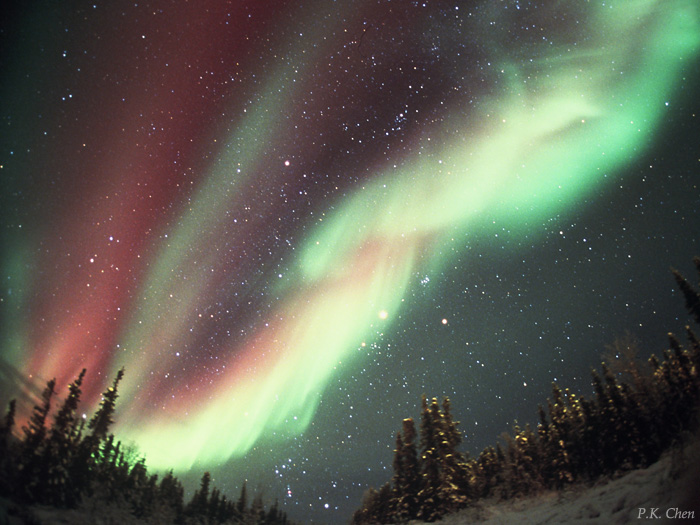
See the Northern Lights! If you haven’t already, go out for a walk on a cold, clear night with a few friends, a thick coat and a thermos of hot chocolate! Seeing the Aurora Borealis is one of the most worthwhile reasons of living in Alaska, and if you see a color other than green, it is one of the best experiences one can have. The NOAA website has a really great Aurora forecast, that updates about every 30 minutes of so.

3001244.jpg

Get a great workout and enjoy some cross country skiing at Birch Hill! Located on Wilderness Drive, the area offers extensive and challenging cross country ski trails for use.

50fd9fef32a0b.image.jpg

If you prefer downhill skiing and snowboarding, you can “shred some pow” at the Moose Mountain Ski Resort. Birch Hill is open Monday through Sunday, and Moose Mountain is open November through February.

heading down moose.jpg

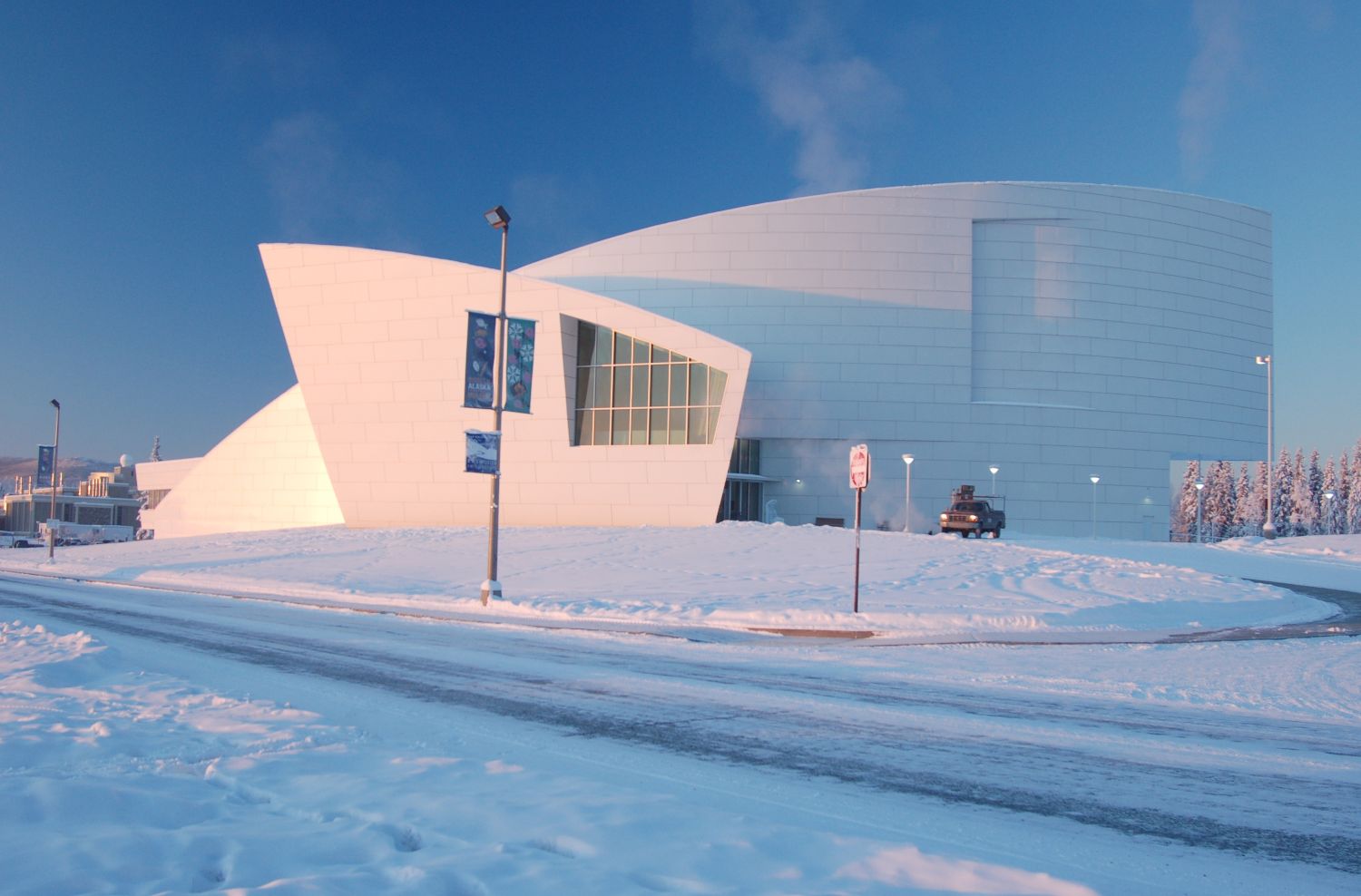
Since you are UAF students, you have free entry to the Museum of the North, that really cool iceberg looking building on campus, past the Reichhardt building. While there you can enjoy a cup of coffee from ACRC while looking out the window at the beautiful Brooks Range. You can also check out the various exhibits in the museum, including the new dinosaur exhibit, the Aurora Room, the Gallery of Alaska, and the Rose Berry Alaska Art Gallery. You can also get a wonderful Alaskan-made souvenir from the gift shop, and watch the 30 minute movies that all about the geographic and historical aspects of Alaska. On December 31st from 7-9pm you can watch the fireworks at West Ridge, and enjoy free hot chocolate and cookies in the museum.

alaskatrip09jan07-08fairbanks1500.jpg

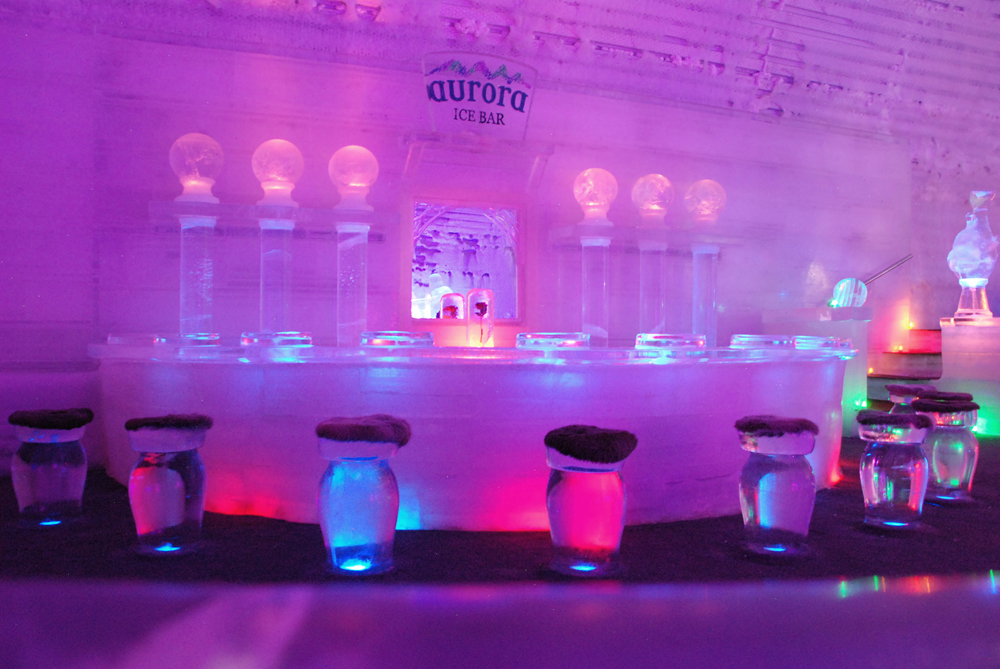
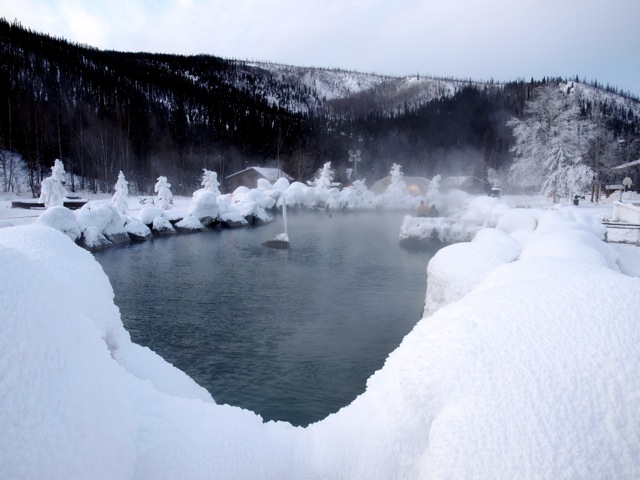
Take a drive or cab ride out to Chena Hot Springs. This may be a little pricy, but in the winter, it is one of the best places to enjoy the Northern Lights and get a wonderful soak in the natural hot springs. They’re open everyday from 7am till midnight. You can also book massage appointments, eat at the restaurant and visit the bar if you’re 21. You can also visit the Ice Museum, which features amazing ice sculptures in the constant 25 ˚F. Perks for those who are 21, you can drink a martini made out of a glass carved from ice!

Chena-Hot-Springs-Ice-museum.jpg

Chena_Hot-springs.jpg

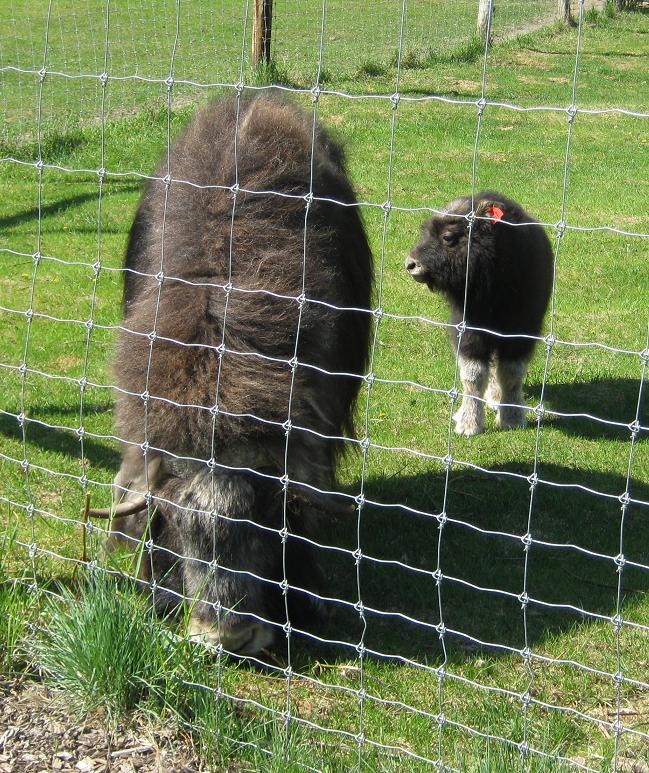
Visit LARS, the large animal research station. Located off of Ballaine road, near the University, you can see muskox and reindeer, as well as some of their cute calves!
MuskoxMamas03.JPG


Friday, December 11, 2015


Fall 2015 Flag Dedication Ceremony Highlights

By Maura Sullivan


#UAFGlobal

The UAF Flag dedication ceremony has been a tradition at the Fairbanks campus for many years, and promotes diversity and international connections. The flags that hang in the Wood Center show the diversity of the student body at UAF. For each international student or exchange student, a flag is hung to represent their home country. On November 20th, we heard from four speakers; the Director of the International Programs, Donna Anger , the ISO president and two of our international students. Our two students that spoke for their flag dedication were from Denmark and Jordan.
The Danish student, Peter Ladefoged, told the story of how the Danish flag came to be what it is today. The most popular legend is that on the field of battle with Estonians in 1219, the Danish were losing, but after praying to God, a flag fell from the sky and the Danes went on to win the battle. The flag is called the Dannebrog, and is the oldest continuously used national flag in the world.

Flag_of_Denmark.svg.png

The white cross represents Christianity, and the red stands for the battle and bloodshed where it appeared.

The second student we heard from is Ala’a Mutawe, a degree seeking student from Jordan. She presented a slideshow about the beautiful sites of her home country, and gave us a wonderful introduction to her culture. She was wearing her traditional Jordanian dress, that had the most amazingly intricate beading. She explained that though they have a similar style dress in other Middle Eastern Countries, you could tell the difference by the pattern of the beading. She also served some delicious black spiced coffee that had cardamom in it, which is one of the essential spices for Jordanian cooking. The black, red and white bands represent the three caliphs: Abbasid, Umayyad and Fatimid. The red chevron is for the Hashemite dynasty, and the seven pointed star signifies the unity of the Arab people and seven verses for the first surah in the Qur’an.

Flag_of_Jordan.svg.png

The third flag to be dedicated was the flag from Greenland, but unfortunately the student was not able to make it. The local name in the Greenlandic language is Erfalasorput, which means ‘our flag’, and has been used as the national flag for 20 years. It is the only Nordic country to not use a cross on their flag. Because Greenland is part of the Kingdom of Denmark, they use red and white of the Danish flag. The colors represent the white of the snow and the red of the sun. The circle in the middle represents the rising and setting sun.

2000px-Flag_of_Greenland.svg.png


Here are some pictures taken at the event: 
Displaying IMG_9020.JPG
UAF's International Student Organization (ISO) leading the ceremony.

Danish exchange student Peter Ladefoged speaking about his flag.

Jordanian student Ala'a Mutawe, dressed in a traditional Jordanian dress, speaks about her flag.


Monday, November 16, 2015

Feature of the Month- November

"I Picked the Farthest University I could Find From Home!"
#UAFGlobal

Johanna Bocklet is a graduate student in Economics at UAF. She is from Koblenz, Germany, a city similar to Fairbanks. Johanna started her bachelor’s degree in Economics in Heidelberg University and wanted to study abroad for a semester. She didn’t know a lot about Alaska when she chose to go to school here but when she got here, she was infatuated. 

She was fascinated by the Alaskan outdoor, waking up to see the mountains outside her window every morning and viewing the northern lights. After a semester at UAF, she returned to Germany to finish her degree and realized her bond with Alaska was more than an infatuation. She got so used to living and learning in and around the wilderness in Alaska that on her return, Heidelberg seemed to have lost some of its familiarity. She also missed the close attention that the professors provide to the students at UAF because of the small class sizes.
She says “I picked the farthest university I could find from home!” mentioning her love for traveling and living in different countries


She didn’t really know if she wanted to do a job or go to grad school after she earned her bachelor’s degree. But given the chance, she would definitely go back to experience more of Alaska.


Johanna with her colleagues after first snow in September 2015


She says, “I applied to UAF for a master’s in Economics degree in the summer of 2014, got accepted and also got offered a job as a Teaching Assistant in the Economics Department!” She says her master’s program is quite interesting and absorbing.


What do you like about Alaska?

She admires the outdoors and loves to travel. “My favorite places in Alaska are Seward and Valdez!- There are mountains on one side and the ocean on the other, and it is simply amazing!”


(L) Johanna in the coastal city of Seward 
She loves to go backpacking and on skiing trips when she isn’t busy with her job and studies


How were you first summer and winter experiences?

The summer of 2015 was her first one here. “It is crazy to explore Alaska when it is not cold!”

Having not been to a place that isn’t road accessible, she says “I’d love to go to a place where you have to be dropped off by an aircraft and spend some time there. Because in Alaska, you don’t have to “find” great spots. It is beautiful no matter where you go. So whenever I can, I try to head out of Fairbanks and explore!”


“My experience transitioning into winter was a funny one. In the beginning, -5°C seemed pretty cold and I didn’t know if I could bear more but come November it just kept on getting colder and darker!”


Johanna at the temperature display on the UAF campus- very close to joining the 40 below club


Being an exchange student then, she would sometimes find comfort in the fact that she was going home at the end of the semester. The dark and cold however, wouldn’t hold her back from being outdoors. “I would go out skiing in December with my headlight on!” she laughs.

“Even after having a sunrise at 11am and walking back from class at 6pm in pitch black darkness to be greeted by the Northern Lights in the winter is a pretty good deal for living in such a cold place in the winter”


What do you miss about home?

German politics, Sparkling water, family, friends, and especially seasonal food from her region in Germany. Döbbekuchen: also called “poor man’s food”, she adds “Döbbekuchen is made from grated potatoes baked in a pot with sausages (pepperoni or salami) and served with applesauce” with a tone of nostalgia. 

“Specific months remind me of specific delicacies. Like November reminds me of Döbbekuchen: it is a very regional food and other parts of Germany probably haven’t heard about it!”

Are you ready to graduate and leave Alaska?


“Easy answer!
NO.”
She would love to work in Alaska after she earns her master’s degree. “My interest is in environmental consulting. I will apply for jobs and see how it goes from there”. She says, “If not Alaska, I would probably go back and work in Europe.”


UAF in one word

Zu Hause- The feeling of being home.
English sometimes does fall short of expressing feelings with words…
She likes being part of the very friendly community here and feels safe living on the UAF campus.

“If I was traveling home to Koblenz, I would say I’m going home… If I was traveling to UAF, I would definitely say the same”